
Commonwealth Home Support Programme (CHSP)- Social Support and Community Engagement Program

We are also pleased to advise that MIC will commence delivering services under our newly funded – Social Support and Community Engagement Program from July 2026. This program is designed to support vulnerable and socially isolated clients by promoting social connection, independence, and community participation.
Services available through this program may include:
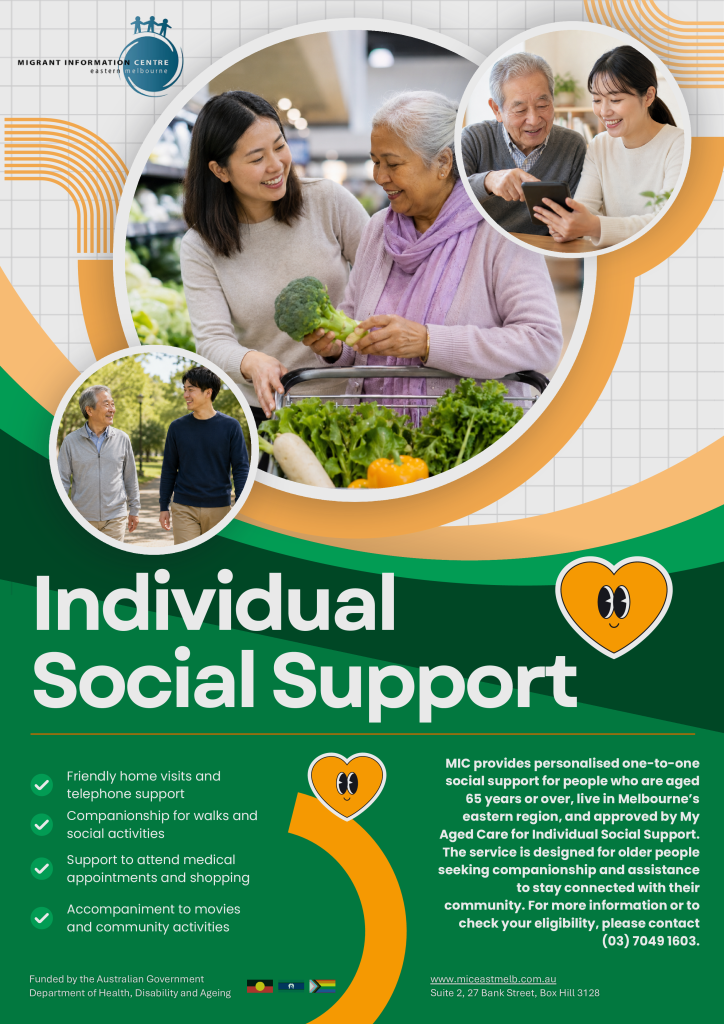
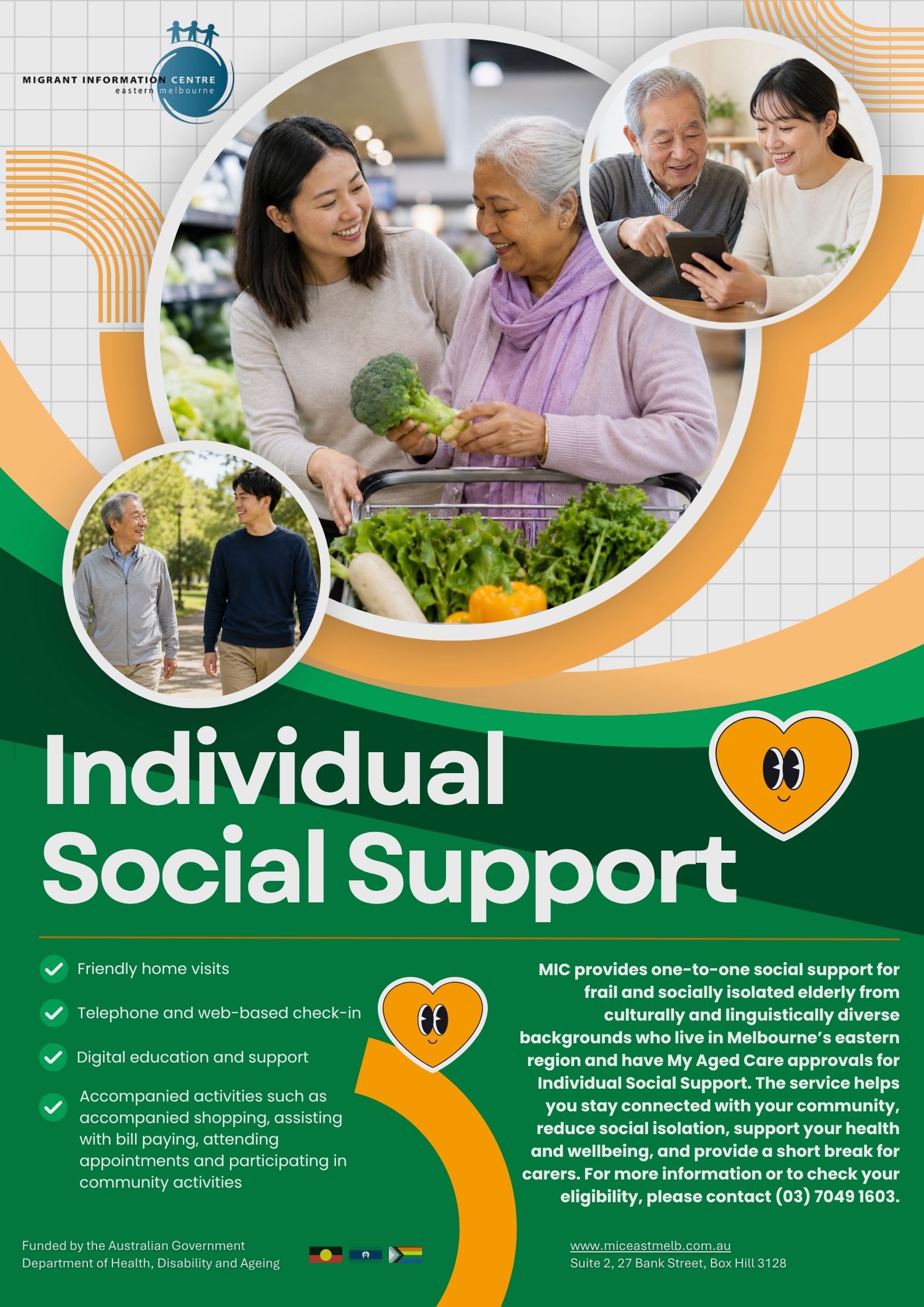
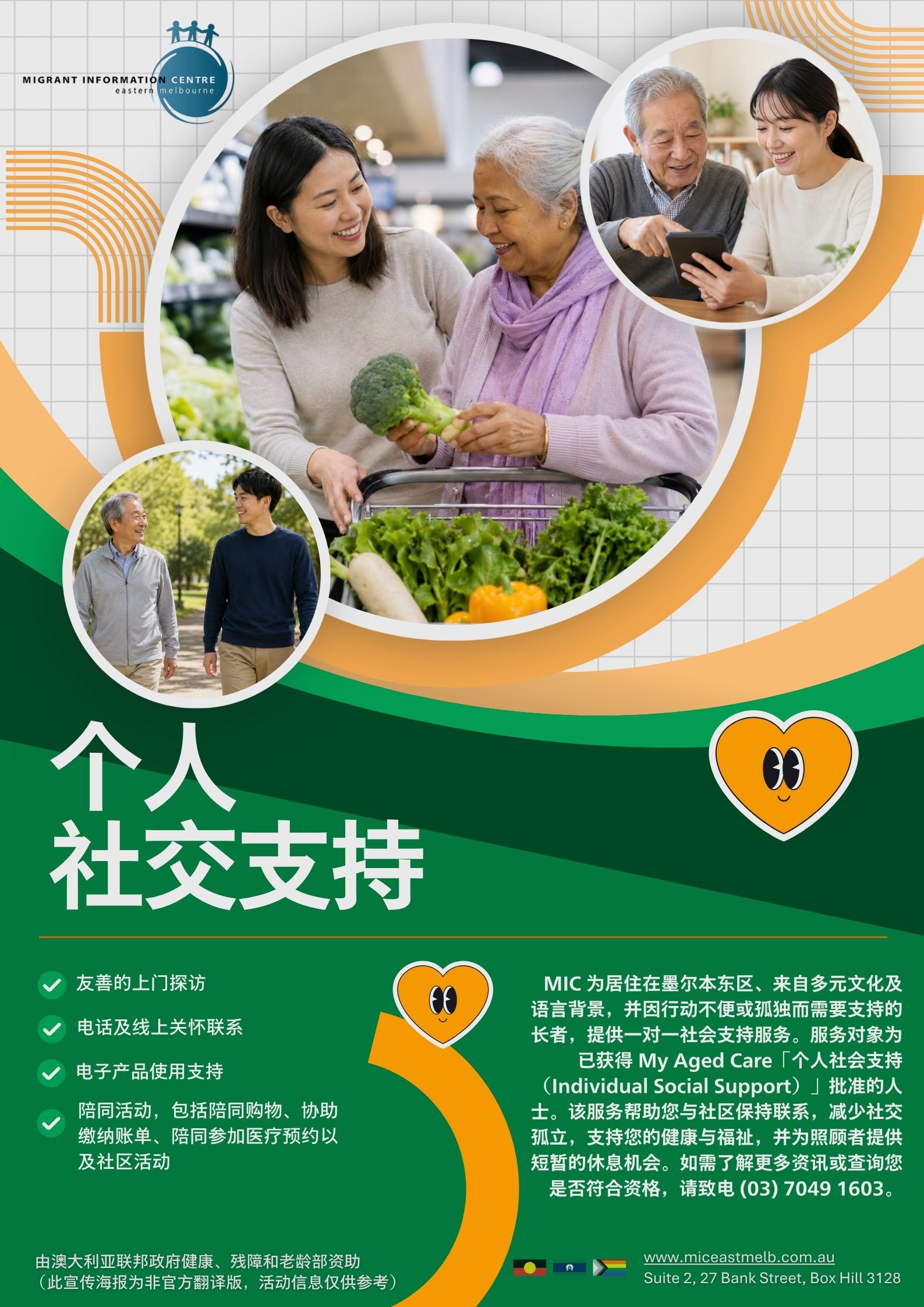
- One-on-one social support visits
- Assistance with attending appointments or shopping
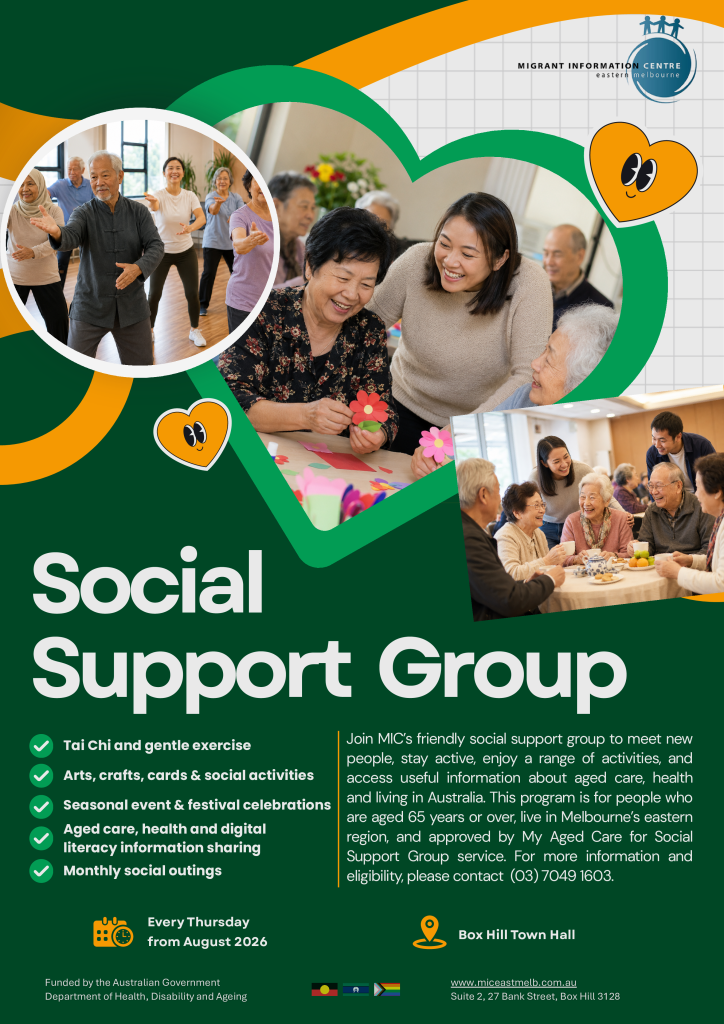
- Group activities and community engagement opportunities
For more information, please contact us on 03 7049 1603.
BROCHURES
Social Support for Individuals English
Social Support for Individuals Chinese
Social Support for Groups English
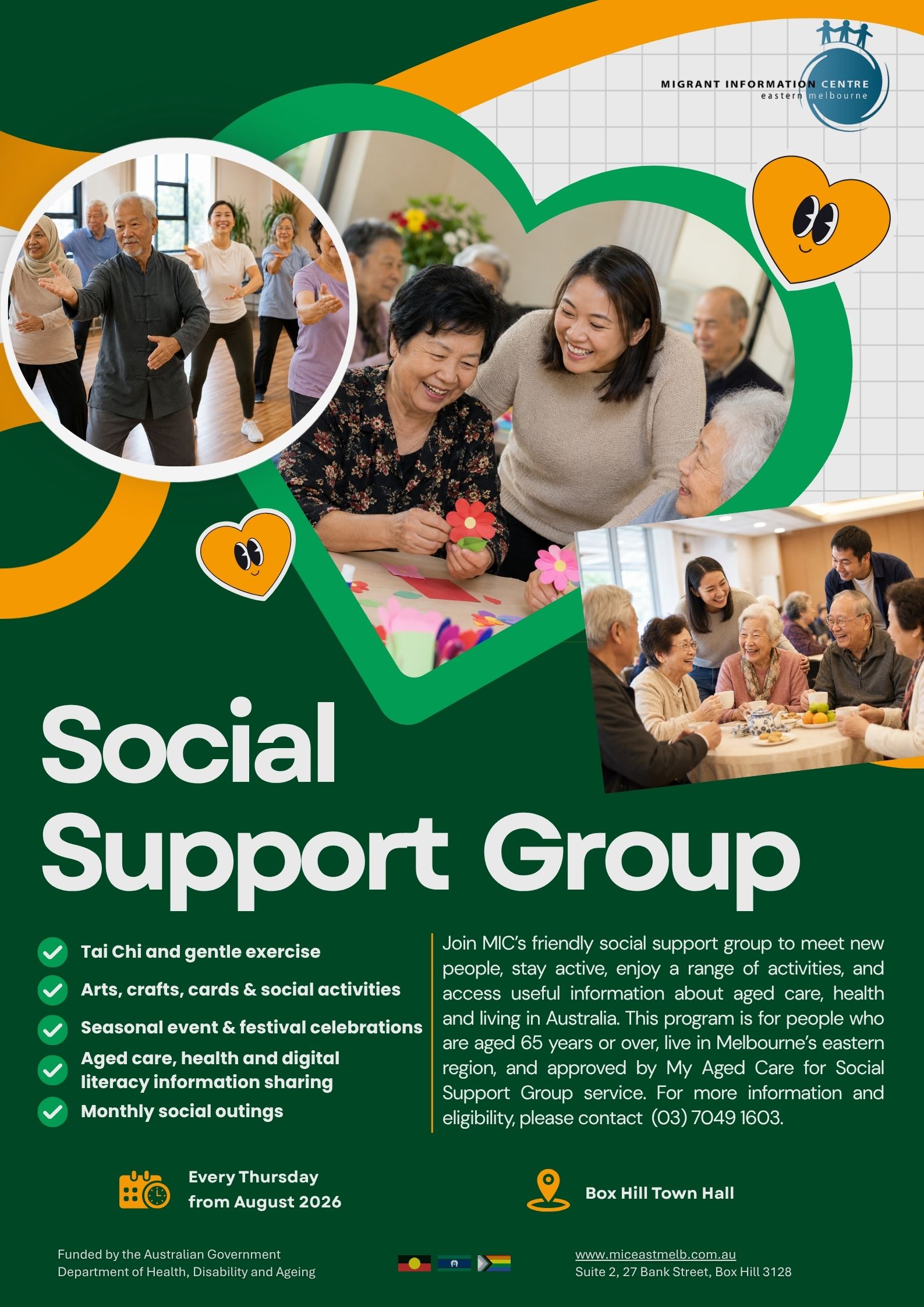
Social Support for Groups Chinese
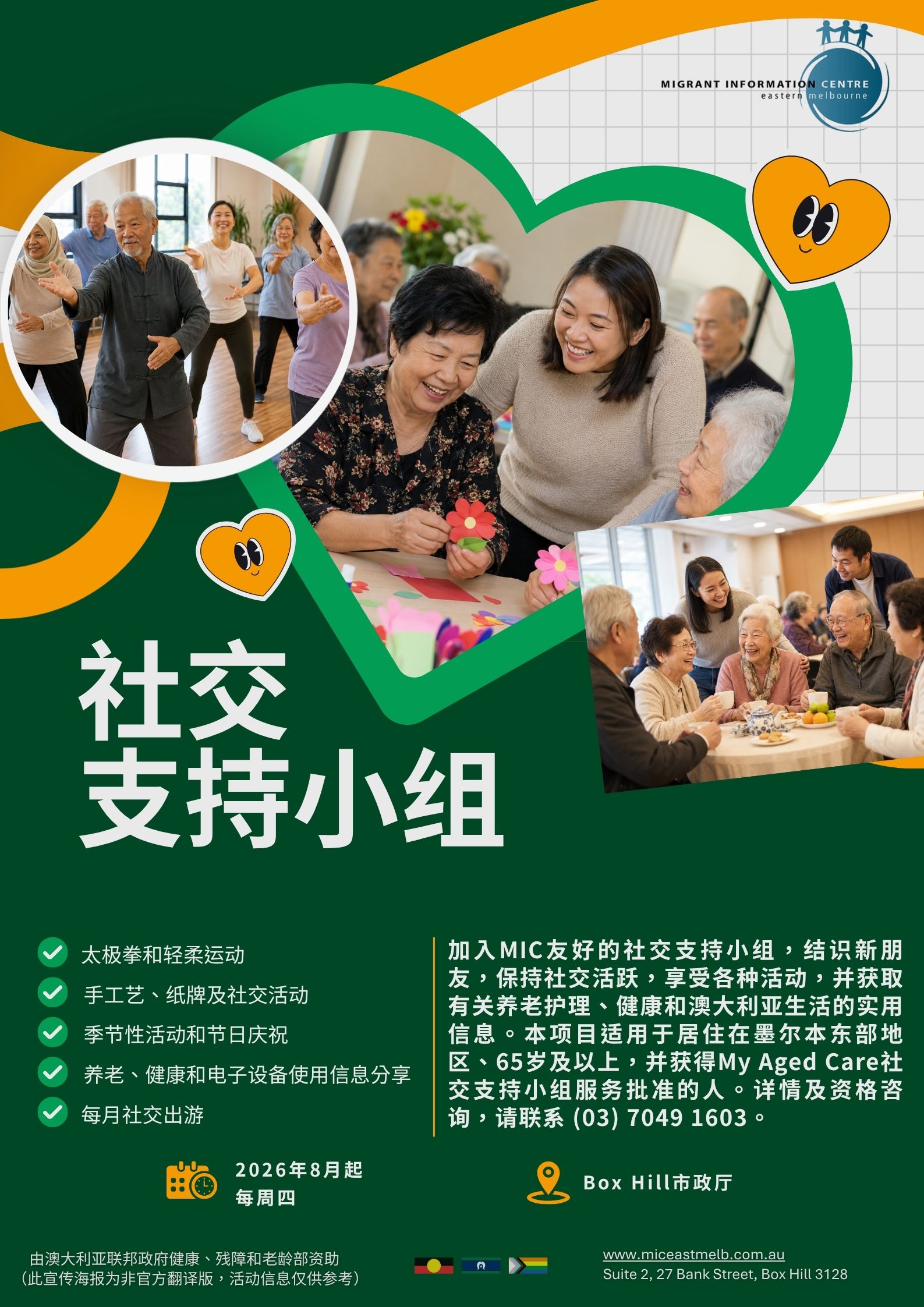
IMPORTANT POLICIES
Fees and Service Charge Policy
Aged Care Navigation Program (ACNP)
The Aged Care Navigation Program (ACNP) helps the vulnerable older people by providing one-on-one specialist and intensive support in their pathways to services. MIC focuses on assisting people from culturally and linguistically diverse backgrounds. It helps people to understand, apply for and engage with aged care services and other support in the community.
The ACNP at MIC is part of the network of the Care Finders. It is funded under the Care Finder Program by the Department of Health and Aged Care and commissioned by the Eastern Melbourne Primary Health Network (EMPHN).
Please click on the links below to access more information.
Service Brochure for Clients:
English
Arabic
Greek
Hungarian
Italian
Persian
Simplified Chinese
Traditional Chinese
Tamil
Vietnamese
Service Brochure for Organisations:
For further information please contact us by phone on 03 9275 6906 or email carefinder@miceastmelb.com.au.
Volunteer Coordination Program for People with Disabilities
The Volunteer Coordination Program links a volunteer to younger people aged 7 years to 64 years with disabilities and/or their carers.
The purpose of the program is to assist individuals with a disability and their carers to:
- Participate in everyday activities
- Maintain or rebuild their confidence
- Improve their social connectedness and emotional wellbeing
- Stay active and healthy
Volunteers can help with:
- Offering companionship and social interaction – indoors/outdoors
- Accompanying client/carer to social activities – e.g. assisting in crafts, gardening, cooking, reading and/or homework
- Coaching clients living skills such as using public transport
- Providing remote support via telephone/videoconferencing/social media apps during COVID-19 restrictions
To become a volunteer please go to our Get Involved Page on this website or apply to become a MIC volunteer by clicking on the bar at the end of this page.
For more information about volunteer positions contact:
Godette McGregor on (03) 7049 1600 or Email mic.volunteering@miceastmelb.com.au
This program for younger people with disabilities is supported by the Victorian Government.
See flyer: Volunteering program

Aged Care Volunteer Visitors Scheme (ACVVS)
The ACVVS program is funded by the Australian Government Department of Health, Disability and Ageing.
The ACVVS is a program designed to connect volunteer visitors with older individuals who may feel socially isolated to provide companionship and support. It aims to reduce feelings of loneliness, promote social interaction and enhance the care recipient’s quality of life.
The program is free for older individuals receiving Australian Government subsidised residential aged care or Support at Home program services who are socially isolated or lonely. This includes care recipients approved and on a waiting list/National Priority System for residential aged care or Support at Home.
ACVVS delivers one-on-one and one-on-two dual in person (face to face) visits to older people. Visits will be conducted at regular intervals throughout the year, typically for an hour each visit, and can include activities like walking or chatting.
The ACVVS volunteer visitors will:
- Be culturally and linguistically appropriate (but are not required to speak another language or be from a migrant background)
- Visit care recipients weekly or fortnightly
- Offer companionship and social interaction
- Obtain a police check and Victorian Working With Children Check
- be supported by the MIC whilst they volunteer with the care recipient
Activities may include:
- Having a chat
- Going for a walk
- Listening to music
- Watching TV or a movie
- Reading
- Board games or card games
For more information on ACVVS program or interest in becoming an ACVVS volunteer visitor, please contact on 03 7049 1603 or email at mic.volunteering@miceastmelb.com.au.

Funded by the Australian Government.